Showing posts with label crinum. Show all posts
Sunday, March 13, 2011
First Roses & Other Spring Things
We're starting to see the first roses of the season: two Chinas and a Polyantha, which makes sense (Chinas being one of the more rugged and floriferous classes of roses for Texas).
Our 'Mutabilis' hedge is looking incredibly dense and leafy and vigorous, and it's sporting one of the season's first blooms.
'Climbing Old Blush' bloomed heavily last spring and only indifferently after that, which is a bit unusual for this cultivar. I think a lot of roses bloomed so hard last spring that they wore themselves out and had to take the summer off. I'm not sure if I should be encouraged or not by the 5 or 6 blossoms COB is already sporting this March. Pace yourself, old thing. You don't want to fizzle in June.
And 'La Marne' has produced its first two flowers. LM ended up in our garden in some happenstancical way, and even though it's a doughty and productive rose, I can't seem to fall in love with it. The color, the flower shape, the flower size--it's all kind of meh. Still. Flowers are a nice thing. So carry on.
Our trees are a good bit more cautious than our roses. Sophora affinis, X Chitalpa taskentensis, and Quercus polymorpha are all leafing out, but the others are either just at the swollen bud stage or else slumber on. Our s....l....o....w.... growing Ginkgo biloba has endearingly snubby little fat buds that are just starting to green up.
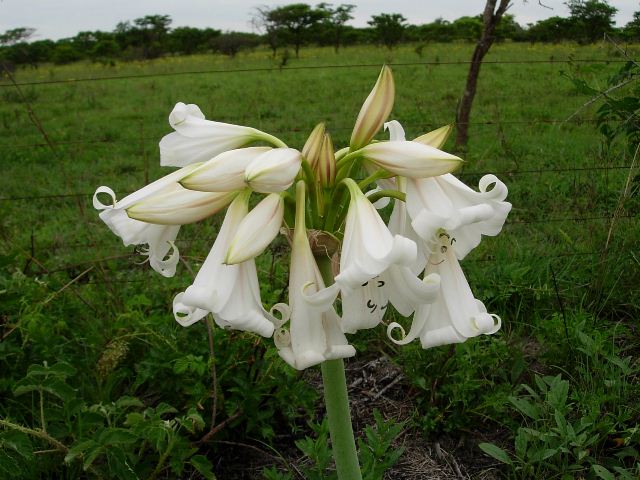
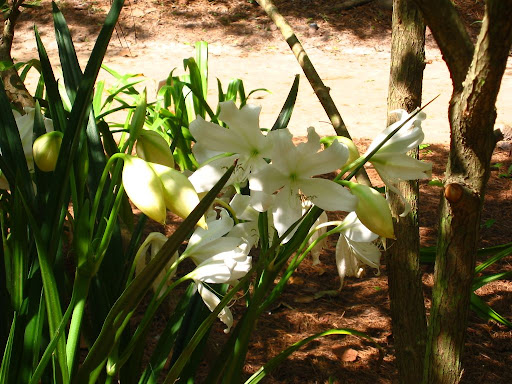
And our crinum are leafing out. They all appear to have survived the freezes: the 'Peachblow', 'Pink Parfait', and (oh, I always forget her name--Pauline Something, maybe?) that Matt gave me for Christmas, all the C. macowannii seedlings scattered around, the C. jagus and C. jagus scillifolia, the tentatively identified C. digweedii, the two red scabrums, the C. powelliis--white and pink--and the many 'Ellen Bosanquets' we have about the yard. The C. powelliis by the study door sort of glued themselves together to the top during our last freeze and I never cleaned them up; now their leaves are weirdly conjoined at the tips.
And lastly, a perverse sort of a sign of spring, all the nasty old ligustrums that suffered freeze damage this winter are cutting their losses and dropping their necrotic leaves. I think the pattern of colors on this one is really rather pretty.
Saturday, October 10, 2009
Fall Update
Do you know what we did yesterday? We burned some more pecan trimmings and huddled around the fire drinking mulled cider because it was cold. That's right--not merely grey and damp, but cold, too. I think that by August, I had lost all faith in the concept of winter. Misery was my native element. "Ye rend me; I care not," I said.
Matt seems to be taking this dramatic reversal of fate in stride. I say things like, "Wow! It's so chilly! I need--I need a jacket! Amazing!" And Matt says, slightly wearily, "It is October." Well, what does that have to do with anything? When the malignant sky gods hate you with an implacable hatred, the mere flipping of a few calendar pages is as nothing to them. The absence of meterological malice is the miracle.
Anyway, I've been enjoying it. I've finally made up my mind: Autumn is my favorite season.
The garden's been enjoying it, too. The roses are all blooming and our "lawn" is covered in a level coat of bright green horseherb. It's actually kind of pretty, horseherb--a very attractive, woodsy shade of green (like something you'd see in Ireland, or so I imagine), and it never gets tall or rangey. Not too horrible, as weeds go.

Among the pleasures is this blooming crinum*. Mystery Crinum #3. It was a in bud a few posts ago, and then I missed its bloom and now it's in bloom again. Attractive, no? Not stellar, but nice. Will do more research and see if I can pin an identity on it.
Pecans: The Agony and the Ecstacy
Also, there is more pecan-related news. Remember those huge, citrus-sized pecans I showed you? They looked like toothsome morsels, right? I expect they would have been, too. But I wouldn't know--you'd have to ask the squirrels. Those fuzzy, larcenous little bastards ate every single pecan off of the back two trees. They never even got the chance to ripen.
So that's that agony part. The ecstacy bit is that the old pecan out front is still covered in pecans, and they've actually begun to ripen; it's dropping fruit that have come out of the husks.
You may remember that our neighber, Mr M, lived in this house as a kid (back in 1920). He remembers his dad planting that pecan, and it was a wild, bitter thing--one year Mr M Senior poured a bag of sugar around the roots of the tree to try to sweeten its small, feral fruits (pecan orchardists: it didn't work). Prior to the squirrel attack, I showed off our trees to Mr M, who was absolutely the perfect audience for this because he adores pecans and also because he knows the property--and he did a complete double-take, jaw hanging open and everything, when I showed him the young trees in the back; but then I showed him the old one in the front, and he was utterly agog. He kept saying things like "Well I'll be gol-damned!" over and over (not kidding about the swearing--so cute). VERY gratifying. Because there were tons of the fruits and they are (apparently) much larger than back in his day.
And they actually taste just fine. I cracked one open, and while the meat was soft (not sure that it's fully ripe yet), it tasted like, y'know, a pecan. And there were tons of them. Nasty little squirrels must be stuck at home with a bad case of indigestion brought on by eating all of my best pecans. Good. I hope they get acid reflux. And ulcers. And dysentery. So there.
Anyway, the pecans from the old tree are all for me!
But I don't know anything about harvesting them. I've got my slinky-on-a-stick, but once I gather the nuts, do I need to let them cure or anything? How long will they keep? What's the deal with the softness (not soft like rotten--soft like bendy)--will that go away if I roast them? I'll keep you posted as the experiment progresses.
____________________
*Possibly Crinum × digweedii, winner of Most Improbable Specific Epithet Award.
Matt seems to be taking this dramatic reversal of fate in stride. I say things like, "Wow! It's so chilly! I need--I need a jacket! Amazing!" And Matt says, slightly wearily, "It is October." Well, what does that have to do with anything? When the malignant sky gods hate you with an implacable hatred, the mere flipping of a few calendar pages is as nothing to them. The absence of meterological malice is the miracle.
Anyway, I've been enjoying it. I've finally made up my mind: Autumn is my favorite season.
The garden's been enjoying it, too. The roses are all blooming and our "lawn" is covered in a level coat of bright green horseherb. It's actually kind of pretty, horseherb--a very attractive, woodsy shade of green (like something you'd see in Ireland, or so I imagine), and it never gets tall or rangey. Not too horrible, as weeds go.
Among the pleasures is this blooming crinum*. Mystery Crinum #3. It was a in bud a few posts ago, and then I missed its bloom and now it's in bloom again. Attractive, no? Not stellar, but nice. Will do more research and see if I can pin an identity on it.
Pecans: The Agony and the Ecstacy
Also, there is more pecan-related news. Remember those huge, citrus-sized pecans I showed you? They looked like toothsome morsels, right? I expect they would have been, too. But I wouldn't know--you'd have to ask the squirrels. Those fuzzy, larcenous little bastards ate every single pecan off of the back two trees. They never even got the chance to ripen.
So that's that agony part. The ecstacy bit is that the old pecan out front is still covered in pecans, and they've actually begun to ripen; it's dropping fruit that have come out of the husks.
You may remember that our neighber, Mr M, lived in this house as a kid (back in 1920). He remembers his dad planting that pecan, and it was a wild, bitter thing--one year Mr M Senior poured a bag of sugar around the roots of the tree to try to sweeten its small, feral fruits (pecan orchardists: it didn't work). Prior to the squirrel attack, I showed off our trees to Mr M, who was absolutely the perfect audience for this because he adores pecans and also because he knows the property--and he did a complete double-take, jaw hanging open and everything, when I showed him the young trees in the back; but then I showed him the old one in the front, and he was utterly agog. He kept saying things like "Well I'll be gol-damned!" over and over (not kidding about the swearing--so cute). VERY gratifying. Because there were tons of the fruits and they are (apparently) much larger than back in his day.
And they actually taste just fine. I cracked one open, and while the meat was soft (not sure that it's fully ripe yet), it tasted like, y'know, a pecan. And there were tons of them. Nasty little squirrels must be stuck at home with a bad case of indigestion brought on by eating all of my best pecans. Good. I hope they get acid reflux. And ulcers. And dysentery. So there.
Anyway, the pecans from the old tree are all for me!
But I don't know anything about harvesting them. I've got my slinky-on-a-stick, but once I gather the nuts, do I need to let them cure or anything? How long will they keep? What's the deal with the softness (not soft like rotten--soft like bendy)--will that go away if I roast them? I'll keep you posted as the experiment progresses.
____________________
*Possibly Crinum × digweedii, winner of Most Improbable Specific Epithet Award.
Thursday, September 3, 2009
Fuzzy Morning Pictures
I was on my way out the door this morning when I saw this particularly lovely bloom on 'Souvenir de la Malmaison.' Work's been a bit tiresome lately, so I thought I deserved to take a few minutes this morning walking the garden and go in a little late. Timeliness is for drones.
This was a very nice thing in terms of seeing flowers as their first, freshest flush. It was not such a good thing in terms of taking photographs. Today's efforts are a sort of expressionist meditation on a flower garden in the middle of a late summer renaissance. (What exactly, you might ask, are the photos are meant to express? The deplorable effect of a lack of light on photographs, I think.)
Anyway, I'm abjectly sorry for the blurriness, but there's so much going on that I had to post them anyway.
For example, this blossom shows the distinctive, delicate coloring on S de la M: Palest pink petals with dark pink in the flower's interior.
Also, these red lycoris (L. radiata) are in bloom. I don't have many of these bulbs, and they only bloom once a year (if that), so I had to snap while I could. These are in front of a trellis of 'Red Cascade.'
Red lycoris and oxblood lilies bloom in the same general season, but I don't think they usually bloom at the exact same time. However, these are. Our yard seems to be in the peak of Oxblood bloom--perhaps hastened by the new irrigation system. The two pictures show the difference in color between these two somewhat similar amaryllids.
We've got a mysterious pink-striped crinum that's about to pop.
And this morning one of my 'Ellen Bosanquets' was rearing up proudly. Unfortunately, by evening the stalk had flopped over, as this particular specimen tends to do. Red-leaved crinum in the background.
Our little 'Mlle. Franziska Kreuger' is covered in little pink balls. None of them are looking their best--all a bit spiky and scruffy, thanks to the weather--but as there are rather few pictures of Mlle. FK online, I thought I'd post this one.
The Triumph of the Pecans
Meanwhile, our pecans are heavy with fruit. The old one in the front yard is to wieghed down that its branches are touching the ground in several places. And fat! I can't believe how big these pecans are. Where did the trees find the water to manufacture fruit so large? We gave them a few (very few) shots of water over the summer--but I can't think that 3 sprinkles with the hose could be transformed into much of anything. Goes to show what I know. I've got one of those pecan picker-uppers that looks like a slinky on a stick, so once they start dropping ripe ones, I'll start collecting.
Pecan pralines, pecan tarts, pecan cookies, candied pecans, spiced pecans, pecan pralines... And this weekend I'm going to make pumpkin-pecan bars.
Fall's a-comin'!
This was a very nice thing in terms of seeing flowers as their first, freshest flush. It was not such a good thing in terms of taking photographs. Today's efforts are a sort of expressionist meditation on a flower garden in the middle of a late summer renaissance. (What exactly, you might ask, are the photos are meant to express? The deplorable effect of a lack of light on photographs, I think.)
Anyway, I'm abjectly sorry for the blurriness, but there's so much going on that I had to post them anyway.
For example, this blossom shows the distinctive, delicate coloring on S de la M: Palest pink petals with dark pink in the flower's interior.
Also, these red lycoris (L. radiata) are in bloom. I don't have many of these bulbs, and they only bloom once a year (if that), so I had to snap while I could. These are in front of a trellis of 'Red Cascade.'
Red lycoris and oxblood lilies bloom in the same general season, but I don't think they usually bloom at the exact same time. However, these are. Our yard seems to be in the peak of Oxblood bloom--perhaps hastened by the new irrigation system. The two pictures show the difference in color between these two somewhat similar amaryllids.
We've got a mysterious pink-striped crinum that's about to pop.
And this morning one of my 'Ellen Bosanquets' was rearing up proudly. Unfortunately, by evening the stalk had flopped over, as this particular specimen tends to do. Red-leaved crinum in the background.
Our little 'Mlle. Franziska Kreuger' is covered in little pink balls. None of them are looking their best--all a bit spiky and scruffy, thanks to the weather--but as there are rather few pictures of Mlle. FK online, I thought I'd post this one.
The Triumph of the Pecans
Meanwhile, our pecans are heavy with fruit. The old one in the front yard is to wieghed down that its branches are touching the ground in several places. And fat! I can't believe how big these pecans are. Where did the trees find the water to manufacture fruit so large? We gave them a few (very few) shots of water over the summer--but I can't think that 3 sprinkles with the hose could be transformed into much of anything. Goes to show what I know. I've got one of those pecan picker-uppers that looks like a slinky on a stick, so once they start dropping ripe ones, I'll start collecting.
Pecan pralines, pecan tarts, pecan cookies, candied pecans, spiced pecans, pecan pralines... And this weekend I'm going to make pumpkin-pecan bars.
Fall's a-comin'!
Friday, July 17, 2009
Drought Flowers
Either because our plants are just that badass or because we've been watering more heavily, we do actually have some that are attempting to bloom in the midst of the drought and the heat. Brave souls.
For the most part, they are strange, tortured versions of themselves, which is actually kind of interesting in its own way. For example, you would never guess that this was 'Lichterloh.'
Similarly, the normally delicate, genteel, and shapely blooms of 'Duchesse de Brabant' have become ragged and irregular.
'Graham Thomas' conserves his resources by drastically reducing the number of petals he produces. Usually fat, golden, and fully double, he's become a pallid semi.
The passionflower is bearing up well--it does indeed appear to be dark purple! Wonderful plant--so extravagant.
The frill bursting from this passionflower bud looks like wayward bits of Silly String.
And the most surprising and delightful news: one of the 'Ellen Bosanquet' crinums that we planted this May is actually already blooming. The buds are rather washed out, but the fact that it's blooming at all comes as a pleasant shock--I assumed it would take a year or two to get established. Of course, the bulbs Dad gave us were quite enormous--larger than softballs in some cases. They have an incredibly rich, heavy lily fragrance.
The precocious bloom of crinum 'Ellen Bosanquet'
We still need to hook up the shade garden and the two gazebo zones, change out the two heads by the pond, put mini sprinklers over the hanging 'Kimberley Queen' ferns and make the front porch a separate zone, and pipe the rose bed, mutabils, and blue and purple bed zones to the central location. We may also make the pole bed and pecan a separate zone and add lines out to the Eve's Necklace and the linden.
Irrigation Schedule
We also need to think about scheduling. I think all of the zones need twice-weekly watering until the heat breaks (~late September, I assume). The weeping yaupon (rose bed), baldcypress (blue-and-purple bed) and Montezuma cypress (pond/gazebo bed) probably need water three times per week, since they're in a fragile state.
If we start getting rain in September (as some people predict, pinning their hopes on El Niño), we can reduce everyone to once per week. If the weather really improves, we'll be able to take the rose bed, blue-and-purple bed, front porch bed, pole bed, and gazebo beds off irrigation altogether in November and just turn the system on manually as needed. I think we'll want to keep the mutabilis bed and shade garden on once-weekly water indefinitely, though.
Next March, we'll put everyone back on once-weekly to take advantage of the growing season and get everyone juiced up for summer. And if the summer isn't too brutal, we may be able to leave it at once a week the whole season. Imagine it: a garden robust with plump, healthy plants, getting enough water to actually grow steadily rather than just enough to stave off death, full of flowers and green leaves... a beautiful sight. And in the long run, very little need for watering at all, once the roots are nice and deep and assuming the current weather pattern is a hiccup, not a terminal case of climatic cancer.
For the most part, they are strange, tortured versions of themselves, which is actually kind of interesting in its own way. For example, you would never guess that this was 'Lichterloh.'
Similarly, the normally delicate, genteel, and shapely blooms of 'Duchesse de Brabant' have become ragged and irregular.
'Graham Thomas' conserves his resources by drastically reducing the number of petals he produces. Usually fat, golden, and fully double, he's become a pallid semi.
The passionflower is bearing up well--it does indeed appear to be dark purple! Wonderful plant--so extravagant.
The frill bursting from this passionflower bud looks like wayward bits of Silly String.
And the most surprising and delightful news: one of the 'Ellen Bosanquet' crinums that we planted this May is actually already blooming. The buds are rather washed out, but the fact that it's blooming at all comes as a pleasant shock--I assumed it would take a year or two to get established. Of course, the bulbs Dad gave us were quite enormous--larger than softballs in some cases. They have an incredibly rich, heavy lily fragrance.
Project Mesopotamia
(Simulating the Land Between Two Rivers) The irrigation project continues. Hopefully, we'll be able to hook several of the systems up to the computer this weekend. Getting everyone on a regular system is essential if we're going to survive August; otherwise, some plants will inevitably slip through the cracks.
We still need to hook up the shade garden and the two gazebo zones, change out the two heads by the pond, put mini sprinklers over the hanging 'Kimberley Queen' ferns and make the front porch a separate zone, and pipe the rose bed, mutabils, and blue and purple bed zones to the central location. We may also make the pole bed and pecan a separate zone and add lines out to the Eve's Necklace and the linden.
Irrigation Schedule
We also need to think about scheduling. I think all of the zones need twice-weekly watering until the heat breaks (~late September, I assume). The weeping yaupon (rose bed), baldcypress (blue-and-purple bed) and Montezuma cypress (pond/gazebo bed) probably need water three times per week, since they're in a fragile state.
If we start getting rain in September (as some people predict, pinning their hopes on El Niño), we can reduce everyone to once per week. If the weather really improves, we'll be able to take the rose bed, blue-and-purple bed, front porch bed, pole bed, and gazebo beds off irrigation altogether in November and just turn the system on manually as needed. I think we'll want to keep the mutabilis bed and shade garden on once-weekly water indefinitely, though.
Next March, we'll put everyone back on once-weekly to take advantage of the growing season and get everyone juiced up for summer. And if the summer isn't too brutal, we may be able to leave it at once a week the whole season. Imagine it: a garden robust with plump, healthy plants, getting enough water to actually grow steadily rather than just enough to stave off death, full of flowers and green leaves... a beautiful sight. And in the long run, very little need for watering at all, once the roots are nice and deep and assuming the current weather pattern is a hiccup, not a terminal case of climatic cancer.
Wednesday, July 1, 2009
The Garden at Night
Austin got a little rain yesterday and today. None to speak of reached Elgin, but we did get 2 days' worth of cooler weather. High today: only 89F--woo-hoo!
In celebration, tonight's blog will be all about happy things.
(1) Favorite Justicia (shrimp plant) cultivar, 'Fruit Cocktail', now beginning its third year in our garden, has taken on a particularly tight, compact, round little form--very cute.
(2) A mere 13 years after originally propagating them via tissue culture, I finally get to see one of my 'Ellen Bosanquet' crinums blooming in my own yard. Almost blooming, anyway. V-e-r-y, v-e-r-y close now.
(3) Both the Echinacea and the '4th of July' roses are doing quite well, blooming and growing (and, unfortunately, clashing horribly. Didn't really think that color combination through when I initally plopped everything in the ground).
(4) Our passionflower is about to put on its first blossom. Will it be the deep purple of my dreams? Or that washy pale periwinkle that I find so ho-hum? We shall see.
(5) Despite the unprepossessing season in which it was planted, the snakeweed(?) Matt brought home a couple of weeks ago seems perfectly chipper--green and blooming. You can't tell in the picture, but the flowers are actually a nice medium purple.
(6) Miraculously, the 'Kaiserin Friedrich' rose lives! It was shipped to us late (the growers forgot our order)--in May, I think--in a very, very expensive 1-gallon ($40! Sheesh! It's a very rare cultivar, unfortunately, so I didn't have much choice) that was poorly rooted. We gave it a couple of weeks in the greenhouse to bulk up the root system, even though that meant planting it in the garden even later than was safe. It's had a few crispy leaves, but it's got plenty of new growth, lots of healthy green foliage--I'm amazed. This rose is named after a British princess who spent her adult life (poor thing) in Prussia--both rather brisk climates. Yet her rose is so far remarkably hardy here in the punishing heat of Central Texas.
(7) And finally, our red-leaved crinum has put on its first, eerie, decadent, spidery flowers of the season.
In celebration, tonight's blog will be all about happy things.
(1) Favorite Justicia (shrimp plant) cultivar, 'Fruit Cocktail', now beginning its third year in our garden, has taken on a particularly tight, compact, round little form--very cute.
(2) A mere 13 years after originally propagating them via tissue culture, I finally get to see one of my 'Ellen Bosanquet' crinums blooming in my own yard. Almost blooming, anyway. V-e-r-y, v-e-r-y close now.
(3) Both the Echinacea and the '4th of July' roses are doing quite well, blooming and growing (and, unfortunately, clashing horribly. Didn't really think that color combination through when I initally plopped everything in the ground).
(4) Our passionflower is about to put on its first blossom. Will it be the deep purple of my dreams? Or that washy pale periwinkle that I find so ho-hum? We shall see.
(5) Despite the unprepossessing season in which it was planted, the snakeweed(?) Matt brought home a couple of weeks ago seems perfectly chipper--green and blooming. You can't tell in the picture, but the flowers are actually a nice medium purple.
(6) Miraculously, the 'Kaiserin Friedrich' rose lives! It was shipped to us late (the growers forgot our order)--in May, I think--in a very, very expensive 1-gallon ($40! Sheesh! It's a very rare cultivar, unfortunately, so I didn't have much choice) that was poorly rooted. We gave it a couple of weeks in the greenhouse to bulk up the root system, even though that meant planting it in the garden even later than was safe. It's had a few crispy leaves, but it's got plenty of new growth, lots of healthy green foliage--I'm amazed. This rose is named after a British princess who spent her adult life (poor thing) in Prussia--both rather brisk climates. Yet her rose is so far remarkably hardy here in the punishing heat of Central Texas.
(7) And finally, our red-leaved crinum has put on its first, eerie, decadent, spidery flowers of the season.
Saturday, June 6, 2009
Mood Indigo & Garden Updates
For some reason, all of our (very limited) stock of indigo flowers all popped into bloom at once. Frost was dead wrong about gold being Nature's "hardest hue to hold"--as anyone can attest who has ever tried to identify one of the [fake statistic:] 47,568 species of yellow daisies. In June and July, hot, blaring, gaudy, distressing gold--along with sulfur, canary, and banana--is everywhere, making you feel even hotter and more exhausted. Indigo, on the other hand, cool, crisp, clean, bright indigo, is much harder to come by.
So here's what we've got. One two-inch tall larkspur.
Several leadworts (which I had to molest violently in Photoshop so that the color would come out at all right)
And some morning glory that we keep trying to get rid of without success.
It's not a lot, I know, but I have to appreciate it while I've got it.
Things That Are Thriving (Or Making a Miraculous Comeback. Or at Least Looking Less Puny Than Expected)
In other happy news, we have about 4 big lemons on our Meyer lemon and a good 4 or 5 more that are still teensy--smaller than the pink part of my pinky fingernail.
We have the variegated pink Meyer lemon, which has this wonderful mottled foliage and striped fruit with a pink interior.

The two Kimberley Queen ferns Mom gave us nearly crashed upon arrival. But now they've greened up and have some nice, new foliage. I think they've decided to live, which is great--we're counting on them to provide much-needed privacy on the front porch.

The cordia keeps blooming, somewhat to my surprise. It's put on some new foliage as well, though not as much as I'd like. Its scrawniness makes the blooms that much more of a coup.

And the tilia/linden/lime/basswood has shot up a good foot or so in the past month! It's handsome, leafy, fast-growing, and one of the few trees we own that isn't crooked--it's gone from being a tree I viewed with mild curiosity to a fast favorite. Plus, I love all the history and folklore around tilias.
At the same time, our little bur oak seedling from Mom & Dad is looking healthier and bigger than ever. I assume this means that it's finally got a good root system going. Back in Houston, the sister seedling to ours is apparently 3 times taller--ah, the copious rains (and irrigations) of Houston! Our little fellow has a tougher, more rigorous life ahead of it, but he seems to have finally girded up his loins and accepted his fate. Funnily enough, this one's leaves are actually bigger than the leaves of our much older ~6-ft bur oak by the garage. Rather variable species, apparently.
The 'Fruit Cocktail' shrimp plants, while looking a bit scrawny in the shade garden, have put on some of their adorable lime-and-cherry-colored blooms. Why isn't everybody growing these?
And the roses are beginning to bend their wills to the task of climbing the gazebo. ' Buff Beauty' is slowly recovering from whatever it is that's been inhibiting her for the past two years. It's growing and blooming a little. Nevertheless, the roses we bought last fall after Pete & Christi's (brother-in-law and sister-in-law-in-law's) wedding are still out-thriving BB. Climbing Cécile Brunner, in particular, is growing and twining with enthusiasm.

In other good news, the Crinum jagus that I got early this spring is--slowly, cautiously--leafing out. We've got C. x powellii all over the place (fruits of an early propagation effort on Matt's part), several C. macowanii seedlings in the ground, and now the C.j.

The only fly in the ointment is the fact that the crinum I actually wanted (C.j. was a bonus freebie), C. jagus scillifolia, has been very reluctant to come to life. This sad green stub is all we've got, at present. Grow, little C.j.s., grow!
And the last bit of good news is that one of the Texas Mountain Laurel seedlings Mom & Dad gave us a couple of years ago is finally growing. The other two seem to have stalled out (too much shade? Too little water?) but this one may actually go somewhere. A few decades hence.

Plants That Are Grumbling (or Worse)
So the baldcypress is still alive; it just isn't very alive. What it is, is very crooked. Below, I superimposed a straight line and a protractor. The tree has a 20-degree angle. I assume this is drought damage.
And the oak-leaf hydrangea we bought this winter has been annoyingly wussy. The good news is that it lets you know when it's feeling the least bit neglected. The bad news is that it always seems to feel neglected. So I use it as an indicator species to let me know when to water the shade garden. Since I intended it to act as a screen, I dearly hope it toughens up by next year, when, presumably, it will have a stronger root system.

And finally, worst of all, the farkleberry is no more. Apparently, I didn't use anything like enough sphagnum when I planted it. It's been scorching and dying limb by limb. It was a beautiful dream. And now it's dead.
So here's what we've got. One two-inch tall larkspur.
It's not a lot, I know, but I have to appreciate it while I've got it.
Things That Are Thriving (Or Making a Miraculous Comeback. Or at Least Looking Less Puny Than Expected)
In other happy news, we have about 4 big lemons on our Meyer lemon and a good 4 or 5 more that are still teensy--smaller than the pink part of my pinky fingernail.
We have the variegated pink Meyer lemon, which has this wonderful mottled foliage and striped fruit with a pink interior.
The two Kimberley Queen ferns Mom gave us nearly crashed upon arrival. But now they've greened up and have some nice, new foliage. I think they've decided to live, which is great--we're counting on them to provide much-needed privacy on the front porch.
The cordia keeps blooming, somewhat to my surprise. It's put on some new foliage as well, though not as much as I'd like. Its scrawniness makes the blooms that much more of a coup.
And the tilia/linden/lime/basswood has shot up a good foot or so in the past month! It's handsome, leafy, fast-growing, and one of the few trees we own that isn't crooked--it's gone from being a tree I viewed with mild curiosity to a fast favorite. Plus, I love all the history and folklore around tilias.
In other good news, the Crinum jagus that I got early this spring is--slowly, cautiously--leafing out. We've got C. x powellii all over the place (fruits of an early propagation effort on Matt's part), several C. macowanii seedlings in the ground, and now the C.j.
The only fly in the ointment is the fact that the crinum I actually wanted (C.j. was a bonus freebie), C. jagus scillifolia, has been very reluctant to come to life. This sad green stub is all we've got, at present. Grow, little C.j.s., grow!
Plants That Are Grumbling (or Worse)
So the baldcypress is still alive; it just isn't very alive. What it is, is very crooked. Below, I superimposed a straight line and a protractor. The tree has a 20-degree angle. I assume this is drought damage.
And the oak-leaf hydrangea we bought this winter has been annoyingly wussy. The good news is that it lets you know when it's feeling the least bit neglected. The bad news is that it always seems to feel neglected. So I use it as an indicator species to let me know when to water the shade garden. Since I intended it to act as a screen, I dearly hope it toughens up by next year, when, presumably, it will have a stronger root system.And finally, worst of all, the farkleberry is no more. Apparently, I didn't use anything like enough sphagnum when I planted it. It's been scorching and dying limb by limb. It was a beautiful dream. And now it's dead.
Saturday, May 2, 2009
Bloom Digest
Hurrah for April! It's May at the moment, but much of what's blooming now is gliding on the momentum of April (except the echinacea, of course--that's just warming up). Summer and fall flushes of flowers can't match the juicy and exuberant profuseness of April. Already we're past the big flush of blooms for the roses. There are still roses in bloom, but not as jubilantly as a week ago.
In happy news, 'Lichterloh' is finally blooming. It took two years of grumpy stasis, but it's finally decided to act like an antique. I don't think the problem is with the cultivar itself: I suspect I just did a sloppy job of planting it or it got a particularly lousy bit of soil. I grew it for years and years in a big pot and it never complained--so I know it's normally tough.
In other notable rose news, I got a decent picture of 'New Dawn.' 'New Dawn' is very prolific and very pretty from a distance, where you see masses of flesh-pale flowers on a glossy dark background. Up close, though, the flowers always seem to look a little faded and browned. However, I was taking pictures at 8:30 this morning, and I actually caught several especially fresh blossoms. Here are two.
It's been a good several weeks for the amaryllids. Almost all of my Hippeastrum have bloomed.
The Aztec lily (AKA Jacobean lily, AKA Sprekelia formosissima) is currently in bloom, looking as fantastical and improbable as ever. I don't know why people don't grow these more often. They're so very showy and striking.
And there are crinum buds and blooms all over the place. The first to bloom so far are the C. × powellii by the study door.

We've also got some trees in bloom. The 'Little Gem' magnolia has more buds now than it did last year, though the tree itself is still a bit thin in terms of leaf cover. It's awfully airy for a M. grandiflora, which should be a dense pillar of dark greenness. Still. Happy to see the flowers.

And the new chitalpa is blooming like nuts, apparently oblivious to the fact that I just put it in the ground! What a trooper. The cordia is also stalwartly blooming, despite being young and scrawny. Attaboy!
Status Updates
From here on out, to be honest, the pictures get a lot less interesting. I'm tracking the status of some of my plants. From a horticultural perspective, "Yay! They're taller and greener!" From a photographic perspective, "Oh, look. It's a small green blob. How thrilling." You see what I mean? I won't hold it against you if you surf on at this point.
First bit of good news: The Meyer lemon still has lemons on it. Last year, we lost them all to the drought. Fingers are crossed that this year the weather gods will be kinder.

Three cheers for Eve's Necklace (Sophora affinis)! This plant gets the Most Abused Plant That Actually Lived award. We chucked it in the ground, didn't give it enough water, dug it up, chucked it elsewhere, still didn't give it enough water, and then subjected it to a drought. We've treated other plants that way. They're all dead (Pistacia texensis, we hardly knew ya...).
The vegetable... it's not even a garden. The vegetable accumulation. The vegetable optimism. The vegetable petiteness. There's row of microscopic tomato seedlings on the right. There are several pots of somewhat promising tomatillos. There's a handful of tiny little fragile-looking chile sprouts. And there are some eggplants somewhere in there (I hope). (Apparently, I only grow members of the tomato family, the solanaceae. I can't explain it--it just happened.)
And finally, my "dark purple" passionflower from Garden of the Ancients has come back. A promising beginning.
The Aztec lily (AKA Jacobean lily, AKA Sprekelia formosissima) is currently in bloom, looking as fantastical and improbable as ever. I don't know why people don't grow these more often. They're so very showy and striking.
And there are crinum buds and blooms all over the place. The first to bloom so far are the C. × powellii by the study door.
We've also got some trees in bloom. The 'Little Gem' magnolia has more buds now than it did last year, though the tree itself is still a bit thin in terms of leaf cover. It's awfully airy for a M. grandiflora, which should be a dense pillar of dark greenness. Still. Happy to see the flowers.
And the new chitalpa is blooming like nuts, apparently oblivious to the fact that I just put it in the ground! What a trooper. The cordia is also stalwartly blooming, despite being young and scrawny. Attaboy!
Status Updates
From here on out, to be honest, the pictures get a lot less interesting. I'm tracking the status of some of my plants. From a horticultural perspective, "Yay! They're taller and greener!" From a photographic perspective, "Oh, look. It's a small green blob. How thrilling." You see what I mean? I won't hold it against you if you surf on at this point.
First bit of good news: The Meyer lemon still has lemons on it. Last year, we lost them all to the drought. Fingers are crossed that this year the weather gods will be kinder.
Three cheers for Eve's Necklace (Sophora affinis)! This plant gets the Most Abused Plant That Actually Lived award. We chucked it in the ground, didn't give it enough water, dug it up, chucked it elsewhere, still didn't give it enough water, and then subjected it to a drought. We've treated other plants that way. They're all dead (Pistacia texensis, we hardly knew ya...).
The vegetable... it's not even a garden. The vegetable accumulation. The vegetable optimism. The vegetable petiteness. There's row of microscopic tomato seedlings on the right. There are several pots of somewhat promising tomatillos. There's a handful of tiny little fragile-looking chile sprouts. And there are some eggplants somewhere in there (I hope). (Apparently, I only grow members of the tomato family, the solanaceae. I can't explain it--it just happened.)
And finally, my "dark purple" passionflower from Garden of the Ancients has come back. A promising beginning.
Subscribe to:
Posts (Atom)